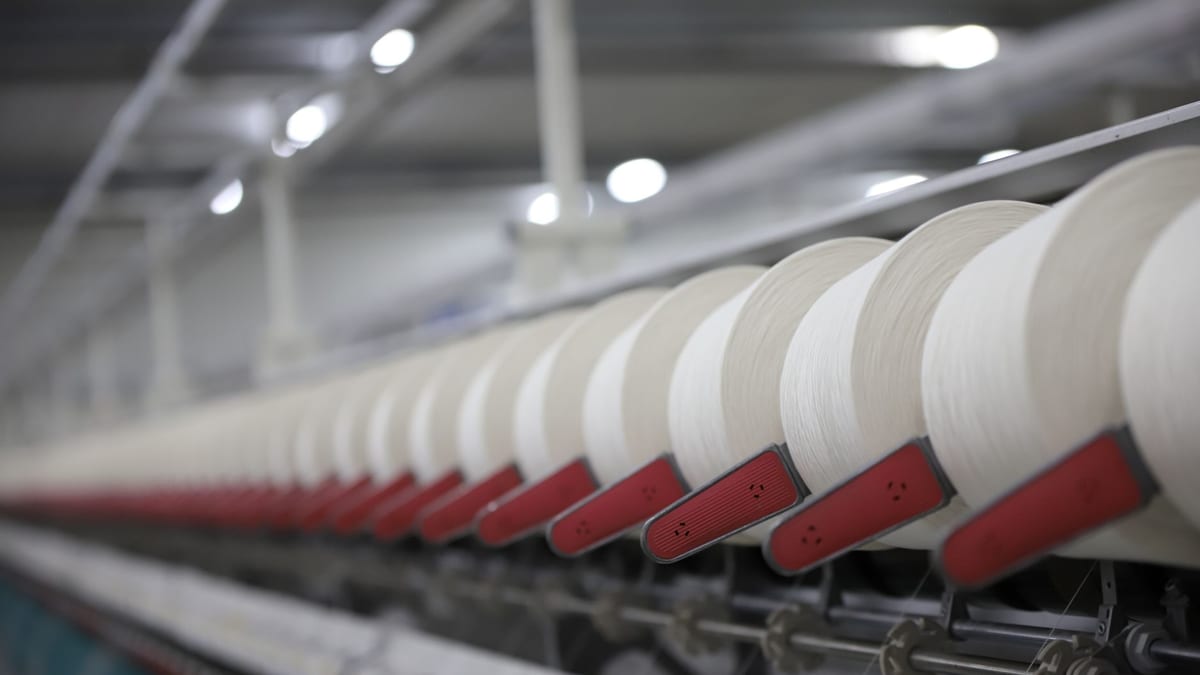
India makes a large share of the world’s cotton knitwear, so finding somebody here who will take your order is not the difficult part. The difficult part is working out which of them will actually make your garment, and which will place it with whoever has capacity that month and forward you the invoice.
This is a guide to the second problem, written from inside a factory in Tirupur. Some of it is not flattering to us.
How do you find apparel manufacturers in India?
Start from the product, not from a directory. India’s apparel industry is regional and specialised: Tirupur does cotton knitwear, Ludhiana does woollens and winter wear, Noida and Jaipur do woven and embroidered garments, Bengaluru does a lot of formal and export woven. A knitwear unit will happily quote you a woven shirt and then subcontract it, which puts you two steps from the person actually sewing.
Once you know the region, the routes are trade fairs, an Apparel Export Promotion Council listing, a sourcing agent, or a marketplace like Alibaba or IndiaMART. All four produce names. None tell you whether the name is a factory, because every listing calls itself a manufacturer.
Treat the search as free and the verification as the real work. Nine checks worth running before you place an order covers that part in detail.
Manufacturer, supplier or agent — which one are you talking to?
Ask which production stages happen inside their building. That single question separates them faster than anything else.
Apparel suppliers in India fall into three groups. A manufacturer owns machinery and runs production — knitting, dyeing, cutting, stitching, printing, packing, or some named subset of those. A trading house or agent owns relationships and places your order with whichever unit is free. An exporter-merchant sits in between, often with a small in-house line and a lot of subcontracting.
None of the three is dishonest by definition. Agents are genuinely useful if you are buying twelve different product types and do not want twelve relationships. The problem is only ever an agent who lets you believe they are a factory, because then nobody in the chain can answer a technical question and quality swings between shipments for reasons nobody will explain.
The tell is specificity. A factory says “we knit and cut here, dyeing goes to a unit four kilometres away, and printing is in-house.” An agent says “we handle everything.”
What does manufacturing clothes in India actually involve?
For knitwear, six stages, in this order:
| Stage | What happens | Who usually owns it |
|---|---|---|
| Knitting | Yarn becomes fabric at the weight your style needs | Factory or a nominated knitter |
| Dyeing and finishing | Shade matched to your Pantone, then compacted and pre-shrunk | Often a specialist dyehouse |
| Cutting | Pattern, grading, marker planning, bulk cutting | Factory |
| Stitching | Assembly on dedicated knit lines | Factory |
| Decoration | Screen, DTG, DTF, sublimation or embroidery | Factory or specialist |
| Finishing and packing | Trims, labels, polybags, barcodes, cartons | Factory |
Almost nobody owns all six — even large exporters send dyeing out at peak. That is normal; what matters is whether they tell you which ones before you ask.
Two of these stages decide most of what your customer will think of the garment, and neither is visible on a sample: the yarn that went into the knitting, and whether the fabric was compacted before cutting. What a GSM figure does and does not tell you is worth reading first — GSM is the number every supplier volunteers, and it is not the one that predicts quality.
What minimum order will an Indian factory accept?
Most small order clothing manufacturers in India will quote 300 pieces per style per colour as the floor on stock fabric. If the shade has to be dyed specially for you, expect around 500 per colour, because a dye lot below that is uneconomic to run and hard to match consistently.
Three things people get wrong about MOQs:
- The minimum is per colour, not per order. One style in four colours is four minimums. This is the arithmetic that turns a “small” first range into several thousand pieces.
- A low MOQ is not automatically good news. A unit accepting 50 pieces is almost certainly buying blanks and decorating them — a different business with different economics.
- Minimums are more negotiable than they look, particularly on a first order where both sides are testing each other. Ask.
Our own numbers and what sits behind them are on the low MOQ page.
What does a private label clothing manufacturer in India charge?
We are not going to print a price here, and you should be wary of anyone who does. A per-piece figure quoted before anyone has seen your spec is either a blank-buying price or a number designed to start a conversation.
What you can know is what moves it. In rough order of impact: fabric weight and yarn type, quantity, decoration method and number of print positions, and trims. A 220 GSM combed cotton tee with a four-colour front print and a woven neck label is a different garment commercially from a 150 GSM carded tee with a single-colour chest hit, and the gap is wider than most first-time buyers expect.
Private label itself — your own woven or printed neck label, care labels written to your market’s rules, hang tags, polybags and barcodes, all applied at the factory — adds less per piece than people assume at any reasonable volume. It is also where a brand actually becomes recognisable, far more than the graphic on the front.
The number nobody at the factory can give you is landed cost. Duty rates depend on your destination, your tariff classification and trade policy that changes. Get that from your own customs broker before you cost a programme.
How long does it take, start to finish?
For a first order, roughly:
| Step | Typical time |
|---|---|
| Quotation against a tech pack | 1–2 working days |
| Pre-production sample | 20–40 days |
| Your approval | however long you take — this is usually the longest step |
| Bulk production | 30–45 days after sample approval |
| Sea freight from South India | 2–6 weeks depending on destination port |
Air freight from Coimbatore or Chennai runs 4–7 days for samples and urgent top-ups, at a cost that only makes sense for small quantities.
The step buyers underestimate is their own. Sampling rounds are where months go — a revision can take 20–40 days, and three revisions plus your internal sign-offs can consume several months before bulk has started.
What can go wrong, and how do you check before you order?
The common failures, in the order we see them:
- Sample and bulk do not match. Guard against it with a signed sealed sample and a written tolerance, not a verbal understanding.
- Shade drifts between repeat orders. Ask whether repeats are matched against the original approved lab dip or against the last batch produced. The second answer means your year-three stock will not match your year-one stock.
- The garment fails after laundering rather than on arrival. Collar stretch, shrinkage and pilling all show up at the tenth wash, which is why washing your sample five times tells you more than inspecting it new.
- Nobody tells you a delay until it is too late to react. This one is character, not process, and you only learn it by placing a small order.
Two checks cost almost nothing. Ask for the GSTIN and Import Export Code and verify both online — a real exporter hands them over without hesitation. And appoint a third-party inspector: SGS, Bureau Veritas and Intertek all operate here, and a factory that gets defensive about one has told you something useful.
- How to vet a T-shirt manufacturer in India
- What GSM actually means
- Tirupur: why India’s knitwear comes from one district
- Fabric dyeing and shade matching
- Screen, DTG, DTF or sublimation
- AQL inspection explained
- How to start a clothing brand with custom T-shirts
- How quality T-shirts impact repeat customers
- How custom T-shirts build brand identity
We cut, stitch, finish and pack cotton knitwear in our own unit in Tirupur, and run yarn, knitting and dyeing through partner units we have used for years — the whole argument is one company accountable for the order, not five. To test that with a small first order, an inspection or a factory visit, tell us what you are making and we will come back with a quote and an honest lead time.
Keep reading
Choisir un fabricant de T-shirts en marque propre en Inde
Un guide pratique pour les marques françaises : cahier des charges, validation du prototype, partenaires de production et préparation de l’importation.
How to choose a private-label clothing manufacturer for a Spanish brand
A practical sourcing checklist for Spanish apparel brands comparing private-label production in India, from samples and specifications to import planning.
T-Shirts aus Indien einkaufen: Leitfaden für deutsche Marken
Ein Leitfaden für deutsche Marken: technische Spezifikation, Musterfreigabe, Produktionspartner und Importplanung für T-Shirts aus Tirupur.