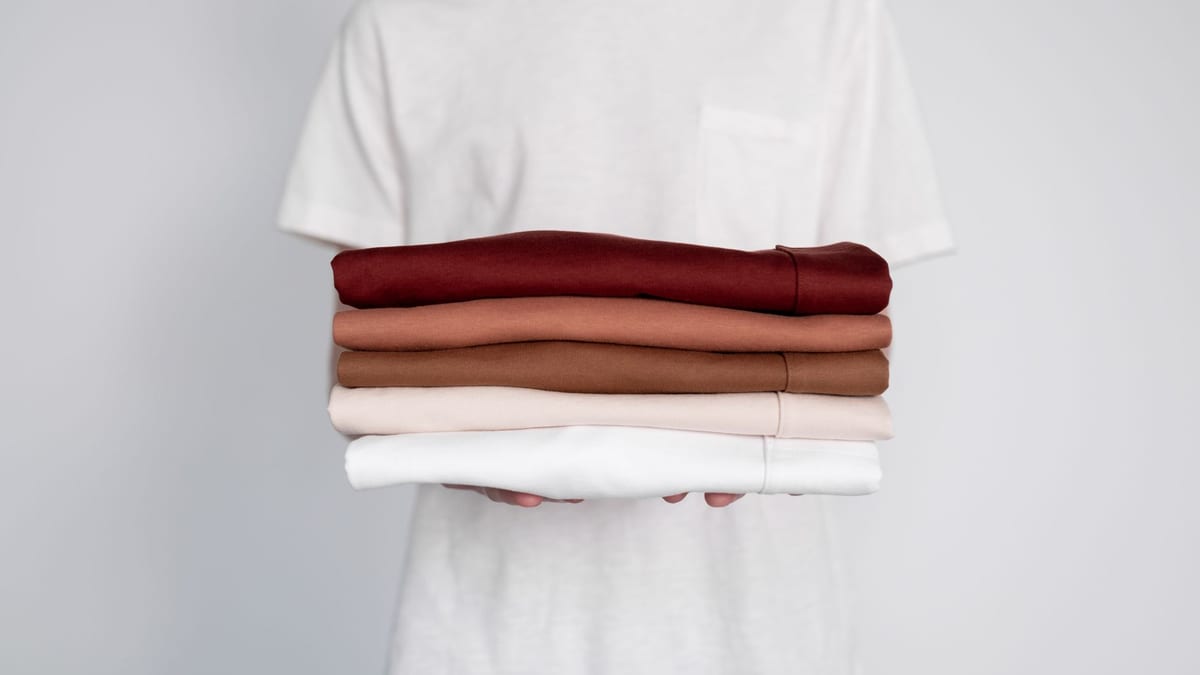
Australian labels sourcing custom T-shirts from India need to solve two jobs at once: get the garment right and make the international supply plan workable. Price per piece matters, but it is only useful once the product, approvals and delivery basis are defined.
Jai Sakthi Garments is based in Tirupur, India, and supplies wholesale and private-label apparel. The pages for Australian buyers explain the service context; this guide covers the practical questions to settle before an order.
Write down the T-shirt you want
Specify fibre composition, GSM, fit, finished measurements, colour standard, neck construction, seam details, label content and placement, decoration, folding, packaging and carton marks. For a multi-size run, include the full size chart and grading. If you have a physical reference, say which parts should be matched and which are changing.
Understand who does each stage
At Jai Sakthi, yarn is bought in; knitting and dyeing/finishing are done by partner units; cutting and stitching are in the company’s own unit; pressing and export packing are also handled in-house. Printing is in-house for available methods and otherwise goes to partner print houses. Embroidery is always carried out by a partner unit. This is a coordinated supply chain, not every process in one factory. Ask how the supplier will coordinate approvals and inspection across the stages relevant to your garment.
Use sampling to remove uncertainty
Before sampling, confirm the tech pack, sample cost, what is included and how many revision rounds are expected. Check the sample against the written spec: measurements, fabric, shade, stitching, decoration and label placement. The current sample estimate is 20–40 days; ask for a project-specific date because fabric and decoration choices affect the schedule. Approve a final pre-production sample in writing before authorising bulk production.
Build a landed-cost plan
Ask whether the quote is FOB, another agreed shipping term, or a different commercial arrangement; clarify the named port/place, packing basis and exclusions. Obtain current freight and insurance estimates for your destination from a forwarder, and confirm import classification, duties, taxes and documentation with your customs broker. Sailing schedules and port-to-port times vary, so do not treat an indicative transit estimate as a delivery promise.
Australian Consumer Law and applicable textile-care or country-of-origin requirements can depend on the product and how it is sold. Have your Australian compliance adviser confirm what applies to your range and approve label artwork before bulk production.
Keep the first order controlled
Choose a focused style and colour range, agree quality checkpoints, and keep a dated record of approvals and changes. Ask who will share inspection findings, how defects are handled, and how cartons will be identified. A reliable quote should state assumptions clearly rather than hiding them inside a low headline price.
Review products and manufacturing capabilities or request a quote with your tech pack and target delivery window.
Keep reading
Choisir un fabricant de T-shirts en marque propre en Inde
Un guide pratique pour les marques françaises : cahier des charges, validation du prototype, partenaires de production et préparation de l’importation.
How to choose a private-label clothing manufacturer for a Spanish brand
A practical sourcing checklist for Spanish apparel brands comparing private-label production in India, from samples and specifications to import planning.

T-Shirts aus Indien einkaufen: Leitfaden für deutsche Marken
Ein Leitfaden für deutsche Marken: technische Spezifikation, Musterfreigabe, Produktionspartner und Importplanung für T-Shirts aus Tirupur.