Most buyers place orders without a clear picture of what happens between their tech pack and the carton that arrives. That gap is where unrealistic lead times, surprise costs and unfixable quality problems come from.
Here is the whole sequence for a knitted garment, in order.
1. Yarn
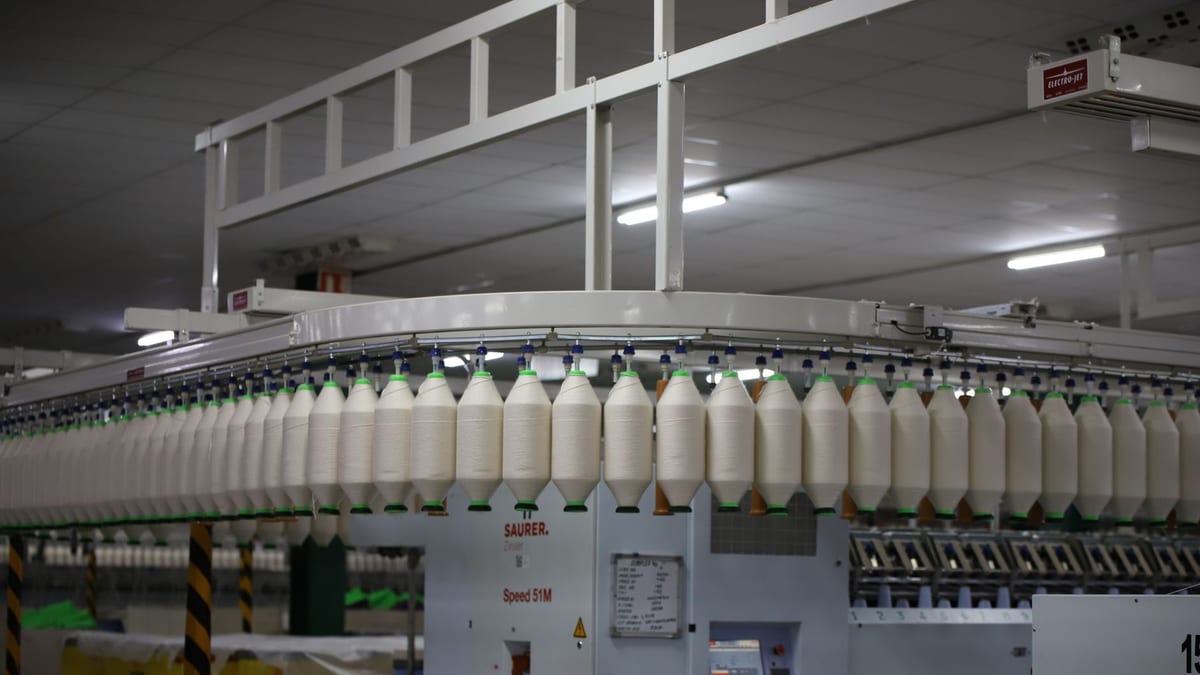
Cotton is spun into yarn, and the first real quality decision happens here: combed or carded.
Combed cotton has had the short fibres mechanically removed, so it is smoother and pills far less. Carded has not. The difference is invisible on day one and obvious after ten washes — which is exactly why cheap suppliers talk about fabric weight loudly and yarn type quietly.
Yarn count matters too: a higher count means a finer yarn and a smoother fabric.
2. Knitting
Yarn becomes fabric on circular knitting machines. The construction is chosen here — single jersey for tees, pique for polos, interlock, rib for collars and cuffs, French terry and fleece for sweats.
This is the step that sets the fabric weight. What GSM measures and what it hides is worth understanding before you specify it.
3. Dyeing
Fabric is dyed to your shade, usually after a lab dip is approved against your Pantone or a physical swatch.
Dyeing is the stage most often subcontracted, even by large exporters, and it is where repeat orders drift out of colour if the factory matches against the last batch rather than the original approval.
4. Finishing
The step almost nobody asks about and one of the three that decide whether the garment survives:
- Compacting and pre-shrinking — determines whether it still fits after two washes
- Bio-washing or enzyme washing — smooths the surface so it stays that way through laundering
- Heat setting, on blends
Skipping finishing saves money and shows up as shrinkage complaints six weeks after delivery.
5. Pattern and grading
Your design becomes a set of pattern pieces, then those pieces are graded across the size run. A women’s block is not a scaled men’s block, and a drop-shoulder streetwear block is not a graded-up standard tee — the pattern discipline is genuinely different.
Sending a physical reference garment removes an entire round of guesswork here.
6. Marker planning and cutting
Pattern pieces are arranged on the fabric width to waste as little as possible — the marker — and then the fabric is spread in layers and cut.
This is where fabric cost is actually won or lost. A more efficient marker means fewer metres per garment. It is invisible to the buyer and it is a real part of why two quotes differ.
7. Stitching
Assembly on dedicated knit lines. The construction details you specified happen here: side-seam or tubular, shoulder taping, neck rib, hem finish, flatlock or overlock.
Shoulder-to-shoulder taping and a properly matched neck rib cost very little and prevent the most common garment failure there is.
8. Decoration
Screen, DTG, DTF, sublimation or embroidery, depending on fabric, quantity and artwork. Which method the garment actually wants is decided by the fabric more than by preference.
Wash-test before the bulk run. Always.
9. Sampling — which is three things, not one
Running in parallel with the above, and the step buyers most often collapse into one:
| Sample | Purpose |
|---|---|
| Fit sample | Is the block right? Made in any available fabric |
| Pre-production sample | The real thing — correct fabric, colour, trims, decoration |
| Sealed sample | Signed by both sides. The reference bulk is measured against |
Typically 20–40 days per round. Three rounds plus your internal approvals can take several months before bulk starts, and that is where most “delays” actually come from.
10. Quality control
Inline checks during cutting and stitching, then a final AQL inspection before packing. What the AQL number on your quotation means is worth knowing before you agree it, because it defines when you can reject a shipment.
11. Finishing, packing and export
Labels, care labels, hang tags, polybags with the right warnings, barcode stickers, carton marking. Then commercial invoice, packing list, bill of lading and certificate of origin.
If this is done at the factory the goods go from container to shelf. If it is not, somebody relabels in your warehouse, and that cost never appeared in the quote you compared.
Where the quality actually gets decided
Of eleven steps, three carry most of the outcome:
- Yarn — combed or carded, decided before anything is made
- Finishing — compacted and pre-shrunk, or not
- The sealed sample — whether there is one, and whether it has a written tolerance
Everything else is competence. Those three are choices, and they are made at quotation stage, not on the production floor.
Who owns what
Almost nobody runs all eleven in-house. Even large exporters send dyeing out at peak, and decoration is frequently a specialist unit.
That is normal and not a warning sign. The warning sign is a supplier who will not tell you which steps are theirs — the first question in how to find a clothing manufacturer exists for exactly this reason.
Of the eleven steps above we run cutting, stitching, pressing, checking and export packing on our own floor in Tirupur, and specify and inspect knitting and dyeing at partner units. We supply brands and importers across the United States from 300 pieces per style per colour. Send us a tech pack or a reference garment and we will tell you which steps we do ourselves and which we do not.
Keep reading
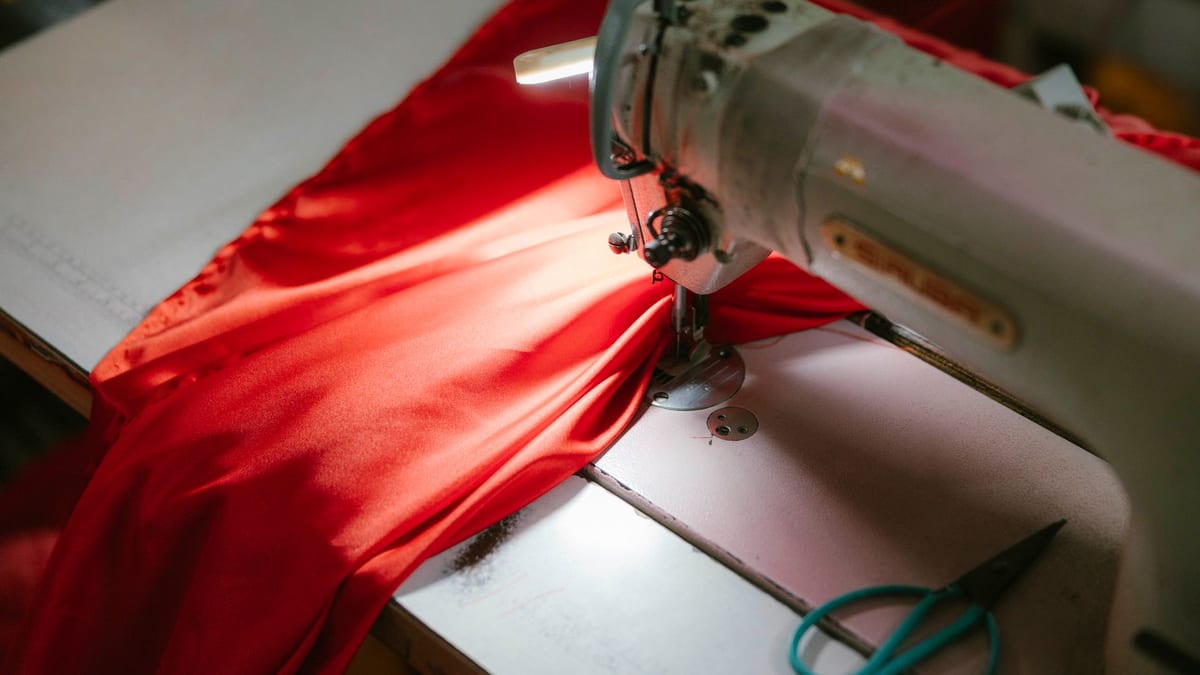
How to find a clothing manufacturer (without getting burned)
The order of operations that works: define the garment, shortlist factories, verify them, sample, then place a small first order. Written by a factory, including the parts that are not flattering to us.
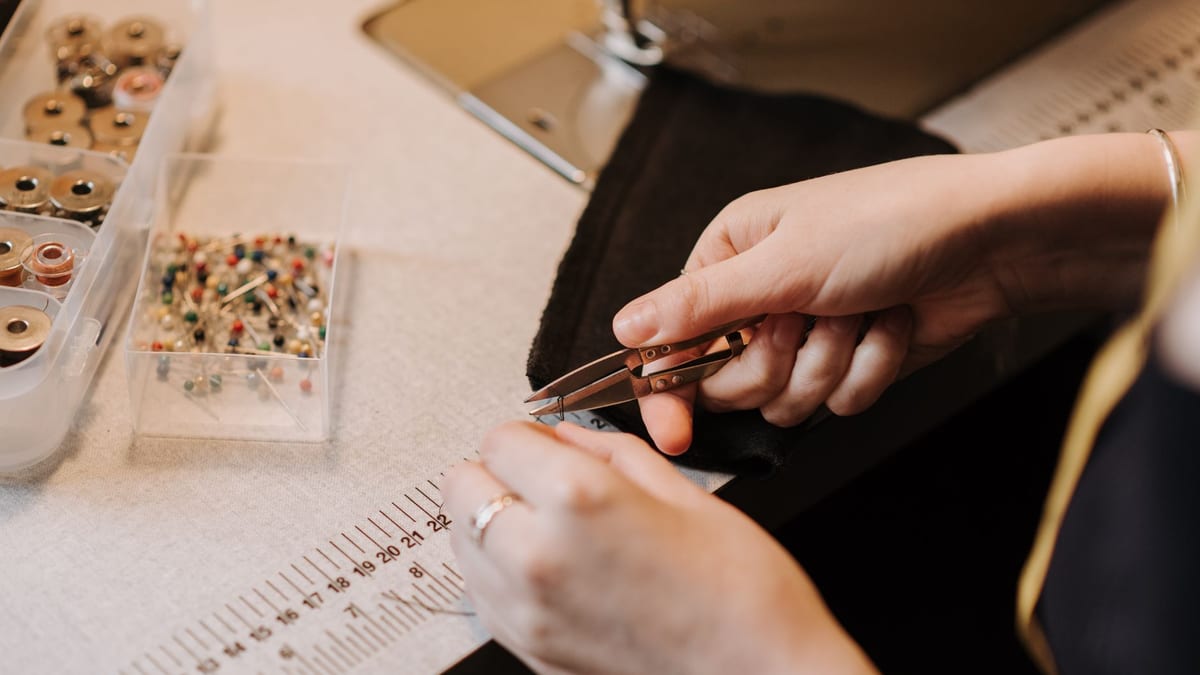
What a 300-piece minimum actually costs you
The arithmetic behind a low MOQ clothing manufacturer — what 300 pieces per style per colour really commits you to, what it buys that blanks do not, and when a lower minimum is a warning sign.

Alibaba alternatives: telling a factory from an agent
Every listing says manufacturer. Here is how to work out which supplier on Alibaba, IndiaMART or a trade show floor actually owns machinery — and where else to look.